
Monday, 7 May 2018

Monday, 30 April 2018
Monday, 23 April 2018
Monday, 16 April 2018
Monday, 9 April 2018
8 Ways Kids Benefit From Yoga
8 Ways Kids Benefit From Yoga
Tiny humans get stressed out too, you know. Listen to our podcast with our yoga guru Aine Kerrigan as she discusses the importance of yoga for children above and read about the benefits of yoga below.
We sometimes forget this as we get through the day, running from A to B. From bed to breakfast to crèche to school runs to work to (insert extra-curricular activity here) to home to homework to dinner to the bath to bed and then we wake up and do it all over again.
Our focus is not on the here and now but on where we need to be next and how long it will take us to get there which, often results in us rushing our children who are happily meandering through their Cheerios. As we plough through each day on auto-pilot, we can forget that we have a little person or people in tow, taking it all in.
The stress, the rushing, the worrying, the excess energy and, just like their spongey brains are soaking up all of the new information they are learning in school, so too are they learning from our example of how to get through life. Rush from point to point. Eat quickly. Load your day with activity and then crash before waking up and doing it all over. The reality is that this is life for most of us today. It just is. There’s nothing wrong with it.
What we may fail to overlook, however, is that this is also the reality for our children. They’re coming along for the ride. They have no choice and, if we’re only beginning to figure out how to deal with this stress, anxiety and burn out, how can we expect our children to know how to centre, focus, step back? They’re just figuring out their maths tables right now.
As adults, we are seeing a general shift in awareness of the importance of mindfulness and practices such as yoga and meditation. Please do not overlook the importance of these practices for your children too. Here’s how yoga can make a difference to your child.
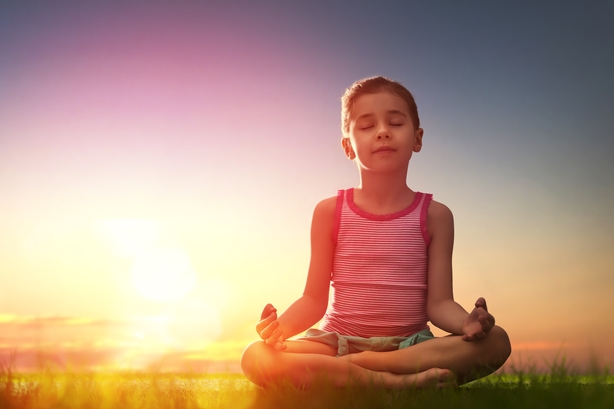
There is no competition…
From an early age, children can begin to feel pressure to perform academically, formalise friendships and interact more socially. Add in extra-curricular activities such as competitive sports or graded music lessons and the list of demands increases.
From an early age, children can begin to feel pressure to perform academically, formalise friendships and interact more socially. Add in extra-curricular activities such as competitive sports or graded music lessons and the list of demands increases.
Yoga offers the opportunity for children to develop skills in a relaxed, non-competitive environment. Children can let go in yoga knowing that they are not being compared to each other, they’re not striving for grades, to be a part of the ‘in’ crowd, to win the race and there is no need to get the perfect pose.
A real confidence booster…
As boys and girls grow and change and respond to the pressures of social media and the likes, they can become overly self-critical and begin to lose confidence in themselves. Yoga for Kids offers a nourishing space where children can play and have fun while developing physically.
As boys and girls grow and change and respond to the pressures of social media and the likes, they can become overly self-critical and begin to lose confidence in themselves. Yoga for Kids offers a nourishing space where children can play and have fun while developing physically.
Yoga also provides the children with the tools to cope with moments of stress or anxiety while helping them to become more ‘in-tune- with their bodies. A key aspect to improving their self-confidence.
Improved body awareness…
As children grow so quickly and their bodies change rapidly, yoga can teach them a sense of body awareness. Coming in and out of poses, they are taught to be mindful and respectful of what feels good and what doesn’t and not to push past this or force the effort.
As children grow so quickly and their bodies change rapidly, yoga can teach them a sense of body awareness. Coming in and out of poses, they are taught to be mindful and respectful of what feels good and what doesn’t and not to push past this or force the effort.
Coming from sitting all day in a class room, the children can come to yoga and, as they relax into the movement they are unknowingly building strength and developing their sense of coordination, flexibility, and balance with improved focus and concentration.
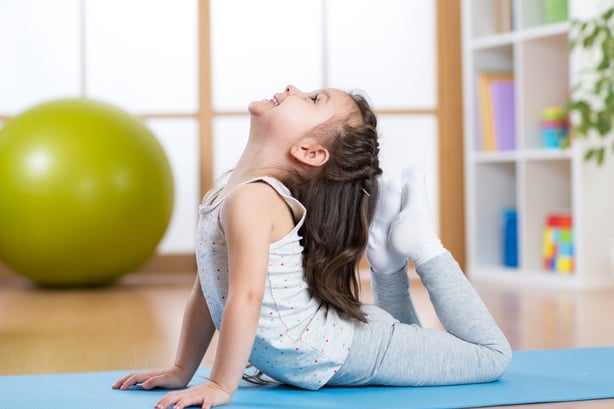
Inspires play and creativity…
When did life get so serious for these little people? Schedules, homework, sports practice or music lessons to name but a few of the added pressures on children today. Yoga brings back a sense of play and improved sociability to the life of a child.
When did life get so serious for these little people? Schedules, homework, sports practice or music lessons to name but a few of the added pressures on children today. Yoga brings back a sense of play and improved sociability to the life of a child.
Most kid's yoga classes balance between structure and spontaneity with a combination of storytelling, songs, games partner work and poses in a multi-sensory environment. The teacher may use props or costumes to inject some fun into the class and will encourage the children's suggestions so that they get to listen to themselves and each other and express themselves creatively.
Freedom of expression…
A kids yoga class offers a safe space for children to express their emotions and also to be creative without fear of judgment.
A kids yoga class offers a safe space for children to express their emotions and also to be creative without fear of judgment.
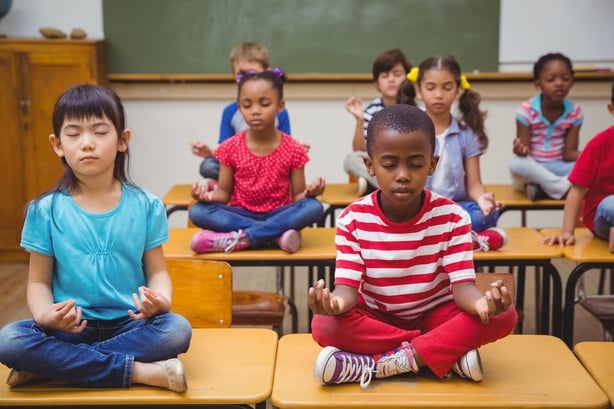
Increased focus and concentration…
Kids yoga nurtures improved focus and concentration through mindfulness, meditation and breathing exercises made fun. Children become more respectful to each other and their peers and so the benefits are not only physical. Mentally, the practice is grounding and calming also - all reasons why more and more schools are introducing yoga to the curriculum.
Kids yoga nurtures improved focus and concentration through mindfulness, meditation and breathing exercises made fun. Children become more respectful to each other and their peers and so the benefits are not only physical. Mentally, the practice is grounding and calming also - all reasons why more and more schools are introducing yoga to the curriculum.
Enhances relationships…
The interaction that occurs during a kids yoga class is so special to observe as you see the children become aware of each other, help each other and work together. Kids yoga encourages compassion, generosity, and respect along with cooperation and teamwork. The teacher may weave a theme throughout the class which helps expand awareness of the environment in which they live in and shares with animals and nature.
The interaction that occurs during a kids yoga class is so special to observe as you see the children become aware of each other, help each other and work together. Kids yoga encourages compassion, generosity, and respect along with cooperation and teamwork. The teacher may weave a theme throughout the class which helps expand awareness of the environment in which they live in and shares with animals and nature.
Some classes encourage the adults to take part also. It can be a way of connecting with your child or children in a different way whilst also connecting with your own inner child. The adult family members can bring what they have learned from the mat and practice at home too.
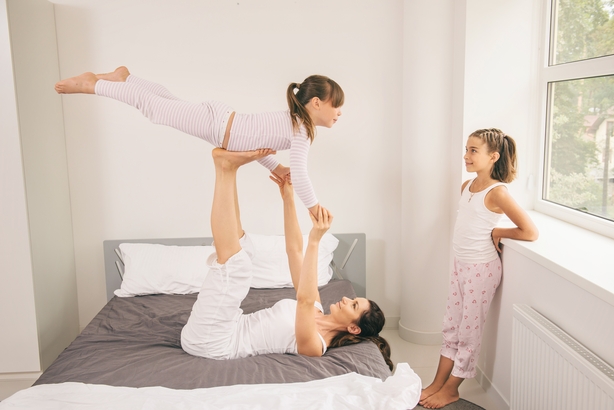
Encourages self-care and relaxation…
How many of us really regularly dedicate time to recharge the batteries? I mean, really, regularly. Self-care, relaxation and mindful moments are essential for a balanced, healthy lifestyle. This is relevant for children as well as adults.
How many of us really regularly dedicate time to recharge the batteries? I mean, really, regularly. Self-care, relaxation and mindful moments are essential for a balanced, healthy lifestyle. This is relevant for children as well as adults.
Yoga for kids teaches children self-care and relaxation techniques to help them to deal with little challenges that may arise in their lives. By learning how the breath can be used as a calming tool during stressful and anxious moments, children learn how to cope in difficult times from an early age.
Yoga offers the next generation opportunities and tools that we may not have had in our youth. A focus on mindfulness and positivity paves the way for a generation with a brighter future. The classes are generally a combination of music, dance, games, interaction, and partner-work depending on the age groups.
Monday, 2 April 2018
7 Benefits of Yoga for Kids with Autism
7 Benefits of Yoga for Kids with Autism
"I like yoga because it makes my body feel safe." -- 6 year old with autism
I recently had the opportunity to teach children’s yoga at the Autism Partnership School in Hong Kong as part of the Yogananth Andiappan Community, and was very moved by these little yogis and the power of yoga to connect with them. Already amazed by yoga’s seemingly endless benefits, I was further intrigued by yoga’s ability to address both the physical and emotional symptoms of autism. New to teaching yoga to children with special needs, I caught up with my friend Rachel Greb, owner/founder of YogaSprouts in Athens, Georgia, to compare notes and pick our favorite 7 ways that children with Autism Spectrum Disorders (ASD) can benefit from yoga. And the winners are…
1. Yoga develops motor skills. Kids with autism frequently experience delayed motor development, which can be improved as yoga tones muscles, enhances balance and stability, and develops body awareness and coordination. As motor skills develop, children have a greater sense of their physical self in space and in relation to others, and can improve their gait and stability. This leads to…
2. Yoga improves confidence and social skills. Poor coordination often yields low self-esteem as kids may be singled out or teased for not moving or behaving like other children, or not excelling in sports and outdoor activities. By learning self-control and self-calming techniques through yoga, they are likely to grow confidence in interacting with other children and refine their social skills. Learning to work together in a yoga class and playing with partner poses can also increase confidence within group settings.
3. Yoga provides sensory integration. Children with autism often suffer from a highly sensitive nervous system and are easily over stimulated by bright lights, new textures, loud noises, strong tastes and smells. Yoga’s natural setting of dim lights, soft music, smooth mats, and “inside” voices creates a comforting environment largely protected from unknown or aggressive stimuli in which calming down becomes enjoyable. Yoga’s physical poses allow nervous energy to be released from the body in a controlled manner, also leading to a calming sensation. Less stimulation means less uncontrollable behavior, outbursts and repetitive nervous movements – which is further enhanced by…
4. Yoga provides coping techniques to both kids and parents. Whether teaching the child breathing techniques for self-calming, talking the class through a guided visualization the child can use when getting anxious, or sharing flashcards of the day’s poses with parents to use at home, yoga provides an awesome toolbox to parents and siblings. It is a transportable practice that both parents and kids can draw from for a lifetime and share a meaningful home activity.
5. Yoga facilitates self-awareness. Yoga is particularly instrumental in helping kids with autism learn self-regulation. By becoming aware of their bodies and aware of their breathing, yoga provides them with the ability to cope when they start to feel anxious or upset. Many 'Yoga for Autism' classes teach yoga poses or breathing techniques specifically intended to help children contend with their escalating emotions. Since these children are visually oriented, savvy instructors add a visual element so that the child has a colored picture of each pose near his or her mat. Often, classes incorporate other experiences known to benefit a child on the autism spectrum, such as massage, music, dance, rhymes and stories
6. Yoga engages the emotional brain. We all know that yoga is far from purely physical, and this combination of movement, music, breath work and story telling activates the brain’s emotional region. This encourages children to develop awareness of their emotions and those of others, as well as keeps their attention in the class. Music is another powerful tool that the yoga instructor can share with parents to use at home to recreate the environment of a yoga class.
7. Yoga is orderly and consistent. Ideally, the class will be scheduled at the same time and same day of the week, with the students’ mats in the same layout, in the same room, with the same instructor(s). In my experience, there was one instructor per student, with the pairing the same week after week to impart a sense of trust and steadiness. This element of order is very important for a child and communicates stability – a state much preferred to being unexpected and thus out of control. Students may also enjoy learning yoga sequences, such as modified sun salutations, that are performed in the same order at every class. The class should have an opening and closing routine or practice – singing, tuning in, etc. – that further supports the students’ need for order.
It seems there is little these days that doesn’t benefit from yoga, and it is amazing to see yoga work its magic on children with autism and their families. To learn more about autism, visit www.autismspeaks.org.
Sunday, 1 April 2018
Saturday, 31 March 2018
What are the Benefits of Yoga?
These are the benefits for everyone! So what are you waiting for?
Get down to your Kids Yogabatics class at Yew Tree Farm!
Check out our timetable here: https://www.facebook.com/Yogabatics-124220061755465/
Friday, 30 March 2018
7 Ways Kids Benefit From Yoga
7 Ways Kids Benefit From Yoga
It's hard to be a kid
today!
Children deal with
many distractions, temptations, overstimulation and peer pressure. Schools are
challenged to do more with less and be creative in how they reach even the most
isolated child.
Yoga is a low-cost,
helpful tool that can have a positive impact on children.
Here are some of the
many benefits of teaching yoga to kids:
Yoga helps kids to:
- · Develop body awareness
- · Learn how to use their bodies in a healthy way
- · Manage stress through breathing, awareness, meditation and healthy movement
- · Build concentration
- · Increase their confidence and positive self-image
- · Feel part of a healthy, non-competitive group
- · Have an alternative to tuning out through constant attachment to electronic devices
In a school setting, yoga can also benefit teachers by:
- · Giving them an alternate way to handle challenges in the classroom
- · Giving them a healthy activity to integrate with lesson plans
- · Give them a way to blend exercise into their classes
Here's what your kids
can expect to learn in yoga class:
1. Awareness of the
breath
Breathing exercises
can energize kids or encourage relaxation, depending on what you teach.
Different games and techniques help kids connect to how their bodies feel as a
result of deep breathing. Focus increases, as does their breathing and lung
capacity. Stress is naturally reduced and healthy hormones are released.
2. Strengthening and
energizing
Kids think that yoga
is great for stretching, but doesn't build strength. It's important for a
teacher to include conversations, as well as exercises around how helpful yoga
is for building strength. Talking about the different muscles used in poses and
incorporating games and sequences will help build strength as well as body
awareness and coordination. Bodies that are strong digest food better, maintain
a healthy weight and can support the stress of carrying heavy loads, like a
backpack. Bodies will also breathe better, work
more efficiently and protect the more fragile joints.
3. Balancing
Balancing poses teach
children that with increased focus, you can increase attention naturally, even
in kids who struggle with different attention challenges. Poses and games
focused on balancing skills, develop an intrinsic strength, evoke a meditative
feeling, and promote stillness and quieting of the mind. This can help kids
deal with the stress of living in a chaotic world where constant stimulation is
a regular part of life.
4. Stretching and
lengthening
It's great for kids to
be strong, but a body that's only based on strength has no way to yield under
pressure. Strong muscles without accompanying flexibility can't move quickly,
pulling on bones and joints. Yoga poses stretch muscles and through integrating
breathing and movement, muscles become warm and become more flexible. They can
yield when they need to, and support tender joints in a more functional way.
5. Awareness and focus
Yoga helps create
awareness in the body through deep breathing and movement. It gives kids a way
to express themselves, build a strong connection between what they hear and
what they do. Children that have healthy body awareness are more confident and
strong, have better posture, breathe better and have a sense of quiet strength.
6. Flowing, connecting
and integrating
When we string poses
together, we give kids a taste of what it means to move with ease. It also
helps them build the awareness that all our movements are a series of
coordinated efforts between muscles, bones, joints and nerves. Older kids are
more able to isolate different muscle groups and get more sophisticated about
movements; things like keeping the arms lifted in Warrior 1, while at the
same time, dropping the shoulders to relax them. All these things together
increase a child's sense feeling integrated.
7. Meditation and
relaxation
Yoga is meditative by
nature. So whether a child is holding a balancing posture, sitting in meditation or
moving through a series of poses, there's going to be a calming, soothing
quality. Giving younger kids something to do as they rest on their mats will
help with their attention, such as suggesting they think of a favorite color or
toy. Older kids will find it easier to rest longer with less structure.
There are lots of
tools you can use to teach yoga to children. The young ones like games, doing
poses from yoga books for children and singing songs with big, expressive
movements. Older children love to create their own poses, be challenged by
balancing and learn about the muscles and other aspects of anatomy.
Excerpted from Stretched:Build Your Yoga Business, Grow Your
Teaching Techniques, Bare Bones Yoga.

Subscribe to:
Comments (Atom)